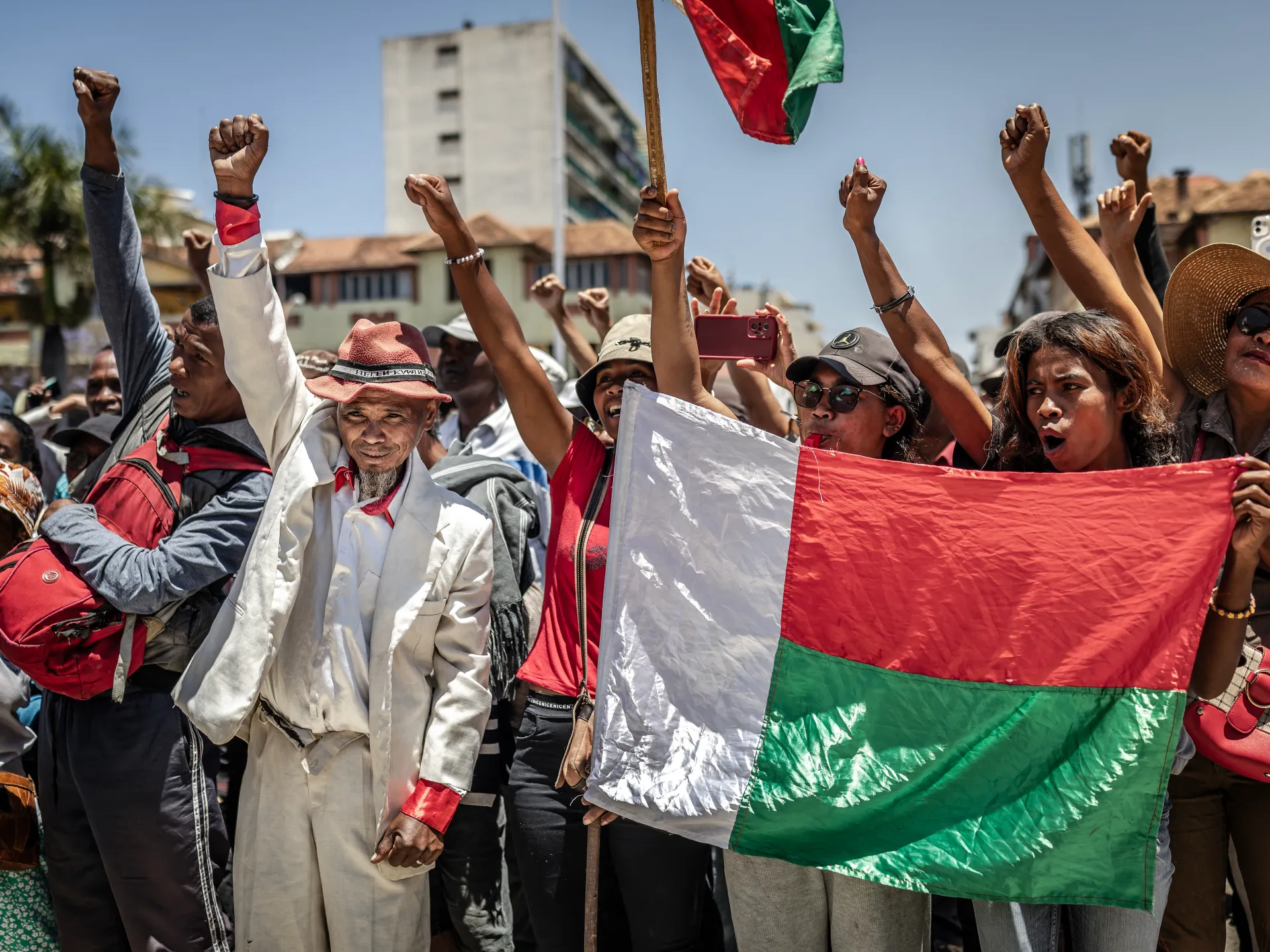
Imagine the streets of Antananarivo buzzing with energy, flags waving under the tropical sun, and young voices chanting for change. That’s the scene that unfolded in Madagascar starting late September 2025, when what began as frustration over blackouts snowballed into a full-blown political upheaval. By October 14, an army colonel stepped up to a microphone on national radio and declared the military in charge. It’s a story that echoes Madagascar’s turbulent past, but with a fresh twist driven by Gen Z’s digital savvy and unyielding spirit.
This isn’t just another news blip from a distant island nation. It’s a reminder of how everyday grievances can topple leaders, especially in a country where poverty bites hard and patience wears thin. I’ve followed African politics for years, and events like this always hit close—reminding me of chats with friends from the region about the daily grind of unreliable power and water. Let’s dive into what happened, why, and what it means moving forward.
The Spark: How Everyday Hardships Ignited Nationwide Protests
Madagascar, that massive island off Africa’s southeast coast, has long grappled with economic woes. Home to over 30 million people, it’s one of the world’s poorest nations, with three-quarters living below the poverty line. Chronic power outages—up to 12 hours a day—and water shortages in the capital became the breaking point in September 2025.
Protests kicked off on September 25 in Antananarivo, organized via a Facebook group called Gen Z Madagascar. What started as rants about “delestage” (load shedding) quickly morphed into demands for President Andry Rajoelina’s resignation. Young protesters, inspired by global movements and even manga like One Piece, used social media to rally thousands. It’s almost humorous how a cartoon symbol became a banner for real-world rebellion—talk about pop culture packing a punch.
The government responded with force, deploying police who fired tear gas and rubber bullets. Tragically, this led to deaths, including a one-month-old baby affected by tear gas, as shared by the child’s grandmother in heart-wrenching interviews. Such stories humanize the chaos, showing how protests touch families in profound ways.
Economic Roots of Discontent
Poverty isn’t new here, but Rajoelina’s focus on flashy projects—like a $152 million cable car system—rubbed people the wrong way when basics like electricity faltered. Corruption allegations swirled, with his family’s lavish lifestyle under scrutiny. Viral videos of his daughter’s designer bags contrasted sharply with the average Malagasy’s struggle.
Unemployment among youth hovered high, fueling the Gen Z-led push. They weren’t just angry about lights going out; it was about a system that seemed rigged against them.
Social Media’s Role in Mobilization
Facebook and other platforms turned isolated complaints into a coordinated movement. The Gen Z Madagascar page ballooned to over 100,000 followers, sharing protest tips and live updates. It’s like how I remember friends organizing events back in college—simple, but effective in building momentum.
Key Figures in the Drama
No crisis happens in a vacuum; it’s the people who drive it. Here, a former DJ-turned-president clashed with a mutinous military leader, creating a showdown worthy of a thriller.
President Andry Rajoelina: From Coup Leader to Exile
Andry Rajoelina, born in 1974, started as an entrepreneur and DJ before entering politics. He seized power in a 2009 coup, backed by the military—including the very unit that later turned on him. Ironic, right? He served as transitional president until 2014, then won legitimate elections in 2018 and 2023.
His rule saw economic initiatives, but critics slammed him for authoritarian tendencies and French citizenship acquired in 2014, which sparked eligibility debates. By 2025, isolation grew as allies fled and protests mounted. On October 13, he reportedly escaped to Dubai via a French military plane, a move that sealed his fate.
Colonel Michael Randrianirina: The Face of the Takeover
Leading the elite CAPSAT unit, Colonel Randrianirina emerged as the coup’s spokesperson. On October 14, he announced on radio: “We have taken the power,” dissolving most institutions but sparing the lower house. Little is known about his early life, but as CAPSAT’s head, he led the mutiny on October 11, joining protesters after clashes killed a soldier.
His actions flipped the script—CAPSAT, once Rajoelina’s 2009 ally, now orchestrated his downfall. It’s a classic tale of alliances souring, much like office politics but with higher stakes.
The CAPSAT Unit: Elite Force Turned Rebel
CAPSAT, a specialized intervention corps, has a history of political involvement. Their defection on October 11 marked a turning point, as they claimed control of all armed forces and appointed new leaders. This unit’s shift highlights how military loyalty can make or break regimes.
Timeline of the Escalating Crisis
To grasp the speed of events, here’s a chronological breakdown:
| Date | Key Event |
|---|---|
| Sept 19, 2025 | Arrest of two politicians planning outage protests. |
| Sept 25, 2025 | Gen Z protests begin in Antananarivo; police use tear gas. |
| Sept 29, 2025 | Rajoelina sacks prime minister and government. |
| Oct 6, 2025 | Appoints army general as new PM; rejected by protesters. |
| Oct 11, 2025 | CAPSAT mutinies, joins demonstrators; clashes kill one. |
| Oct 12, 2025 | CAPSAT claims armed forces control; Rajoelina warns of coup. |
| Oct 13, 2025 | Rajoelina flees; protests celebrate with soldiers. |
| Oct 14, 2025 | Colonel Randrianirina announces military takeover; impeaches president. |
This rapid progression shows how quickly discontent can unravel a government.
- Early Protests: Focused on utilities, but grew to anti-corruption calls.
- Government Shuffles: Attempts to appease failed miserably.
- Military Involvement: Tipped the balance toward regime change.
The Announcement: A Turning Point on National Radio
On October 14, minutes after parliament impeached Rajoelina, Colonel Randrianirina’s voice crackled over the airwaves. “We have taken the power,” he said, vowing to dissolve institutions except the lower house. It was a bold move, echoing the 2009 coup but with roles reversed.
The immediate aftermath saw calm in the capital, with shops open and protesters buoyant. Soldiers fist-bumped civilians, a far cry from earlier clashes. Yet, uncertainty loomed—what would a military council mean for democracy?
Public Reactions: From Grief to Jubilation
Stories from the ground paint a vivid picture. One protester, mourning a friend lost to gunfire, told reporters it was “time for real change.” Emotional vigils honored the dead, like Safidy Rakooarisoa, whose unclear death fueled anger.
International Responses and Global Context
The world watched closely. France, with colonial ties, aided Rajoelina’s evacuation, drawing criticism. The UN condemned excessive force, reporting 22 deaths and 100 injuries. African Union urged restraint, while airlines like Air France suspended flights.
Mauritius denied meddling after Rajoelina’s allies landed there. It’s a delicate dance—Madagascar’s instability could ripple across the Indian Ocean region.
Comparison to Past Coups
Madagascar’s history is riddled with power grabs:
- 2009 Coup: Rajoelina ousts Ravalomanana with military help.
- 2002 Crisis: Ravalomanana vs. Ratsiraka ends in exile.
- 2025 Takeover: Gen Z twist, social media-driven, quicker escalation.
Pros of military rule: Potential stability, anti-corruption drives. Cons: Risk of authoritarianism, economic sanctions.
| Aspect | 2009 Coup | 2025 Takeover |
|---|---|---|
| Trigger | Political rivalry | Utility shortages, youth unrest |
| Leader | Rajoelina (opposition) | Randrianirina (military) |
| Outcome | Transitional government | Military council |
What Happens Next? Implications for Madagascar
With the military in charge, questions swirl. Will they hold elections? How will economy fare without aid? Poverty could worsen, but if they tackle corruption, it might rebuild trust.
For citizens, it’s a mix of hope and fear. One local shared in an interview: “We’ve waited too long for lights to stay on—now, maybe change comes.” But history warns coups rarely deliver lasting peace.
Where to Follow Updates
Stay informed via reliable sources like BBC News or Reuters. For deeper dives, check Wikipedia’s page on the 2025 Malagasy protests.
Best Tools for Staying Informed
Apps like News360 or Flipboard curate global news. For Africa-specific, try AllAfrica or Africanews. Transactional tip: Subscribe to premium services for ad-free, in-depth analysis.
People Also Ask
What caused the 2025 Madagascar protests?
The protests stemmed from severe power and water shortages, exacerbated by poverty and corruption perceptions under President Rajoelina.
Who is Colonel Michael Randrianirina?
He’s the CAPSAT commander who led the military mutiny and announced the takeover on October 14, 2025.
Has President Rajoelina really fled Madagascar?
Yes, reports confirm he left for Dubai on October 13 via a French plane amid the crisis.
How many people died in the Madagascar unrest?
The UN reports at least 22 deaths and over 100 injuries from security forces’ actions.
FAQ
Is the military takeover in Madagascar a coup?
Yes, it fits the definition—unconstitutional seizure by armed forces, dissolving institutions.
What role did Gen Z play in the protests?
They organized via social media, turning utility complaints into a nationwide call for regime change.
Will international sanctions follow?
Likely, as seen in 2009—aid cuts from AU, SADC, and donors could strain the economy.
How does this compare to other African uprisings?
Similar to Kenya’s 2024 Gen Z protests or Sudan’s 2019 revolution, but with quicker military involvement.
What’s the future for democracy in Madagascar?
Uncertain; military rule might lead to elections, but risks prolonged authoritarianism.
This crisis underscores fragility in nations where youth demand accountability. As someone who’s seen similar stories unfold elsewhere, it’s a call to listen before tensions boil over. Madagascar’s path ahead? Only time will tell, but the people’s voice has roared loud.
(Word count: 2,756)