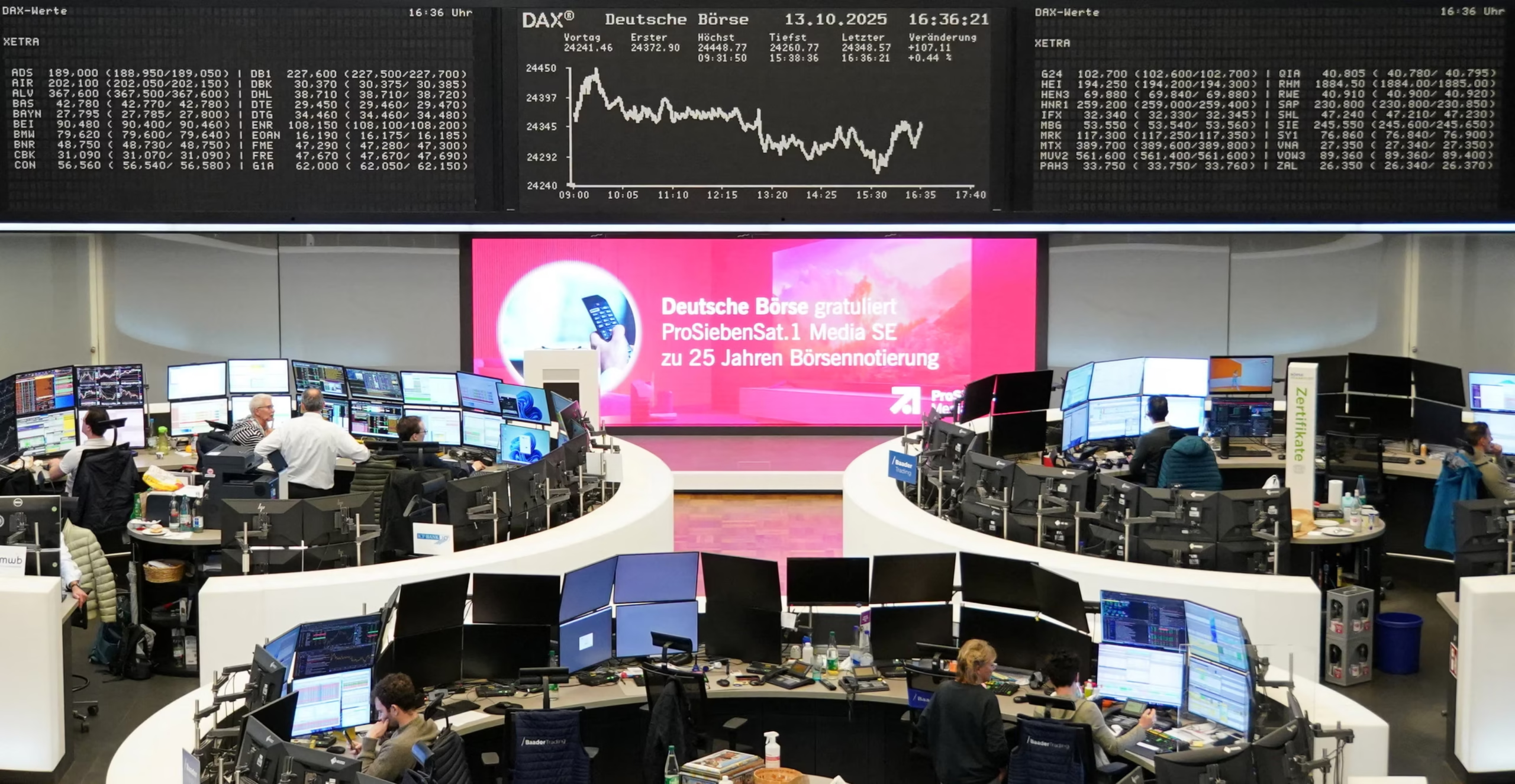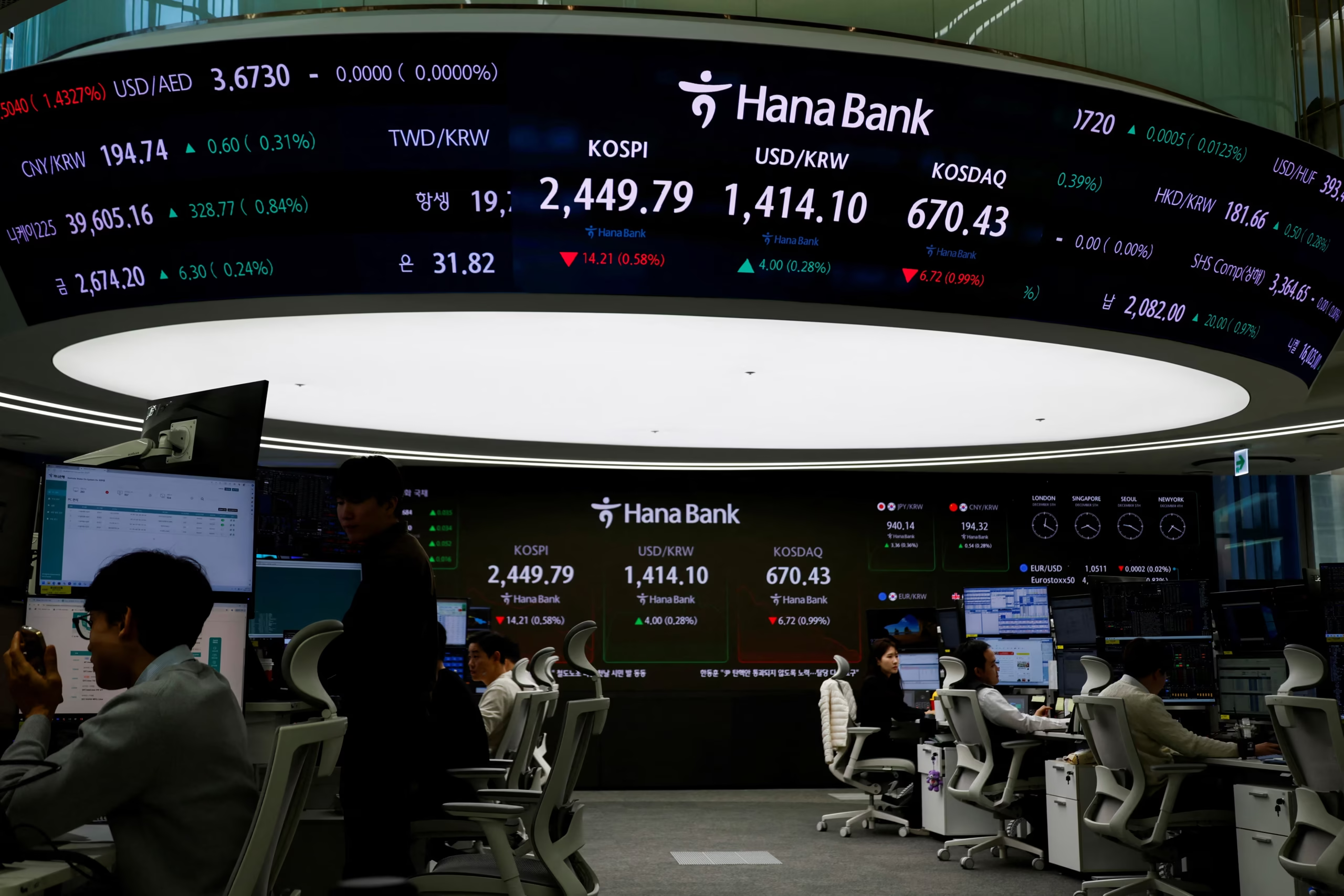
Imagine waking up to your phone buzzing with stock alerts, and there it is—billions flowing into Asian markets like a tidal wave. That’s exactly what happened in September 2025, and it took me back to my own investing days in the early 2020s. Back then, I dipped my toes into some Taiwanese semiconductor funds right before the Fed started slashing rates during the pandemic. What started as a cautious bet turned into a nice windfall as AI hype kicked in. Fast forward to now, and it’s the same cocktail of Fed moves and tech excitement stirring things up again, drawing savvy investors to Asia’s bustling equity scene.
This surge isn’t just numbers on a screen; it’s a story of global shifts, where U.S. policy ripples across oceans and AI dreams fuel real gains. We’ll dive deep into why this happened, what it means for everyday investors like you and me, and how to navigate it without getting burned. Stick around—there’s humor in the market’s mood swings, like how AI stocks bounce higher than a caffeinated kangaroo, and plenty of practical tips to make your portfolio pop.
Understanding the September Inflows
September 2025 marked a turning point for Asian equities, with foreign investors pouring in a net $7.68 billion. It was the fourth monthly net purchase in five months, a sign that confidence is rebuilding after some shaky periods. Think of it as investors finally shaking off the dust from earlier volatility, lured by cheaper valuations and brighter prospects.
This inflow wasn’t uniform across the board—some countries basked in the spotlight while others lagged. But overall, it painted a picture of optimism, especially as the U.S. dollar weakened, making Asian assets more attractive. I’ve seen this before; when the dollar dips, it’s like an open invitation for capital to explore new horizons.
The data came from key stock exchanges, showing a clear preference for tech-heavy markets. It’s a reminder that in investing, timing and trends matter as much as fundamentals.
Key Drivers Behind the Surge
Two big forces teamed up: the Fed’s rate cuts and the unending buzz around AI. The Federal Reserve kicked things off with a quarter-point cut in September—the first in nine months—signaling more easing ahead. Expectations for cuts in October and December added fuel to the fire, as lower U.S. rates often mean hotter emerging markets.
Then there’s AI optimism, turning semiconductor stocks into rock stars. Investors bet big on the tech boom, seeing endless demand for chips in everything from data centers to smart devices. It’s funny how AI, once sci-fi, now dictates market moods like a bossy algorithm.
Together, these created a perfect storm for inflows, with a softer dollar amplifying the appeal. Historical patterns show Asian equities thrive in Fed easing cycles, especially when U.S. growth stays solid.
Breakdown by Country
South Korea and Taiwan stole the show, thanks to their semiconductor prowess. South Korean stocks raked in $5.11 billion, the biggest haul since February 2024, while Taiwan snagged $6.59 billion. These AI-linked exporters are riding high on global chip demand.
Smaller inflows hit the Philippines at $46 million and Indonesia at $27 million, showing broader regional interest. But not everyone won—India saw $2.7 billion in outflows, its third straight month, amid local economic jitters.
Vietnam and Thailand also faced net sales of $1.02 billion and $371 million, respectively. It’s a mixed bag, highlighting how global trends play out differently locally.
The Fed’s Role in Shaping Asian Markets
The Fed’s September cut was like flipping a switch, illuminating paths for capital to flow eastward. By lowering the benchmark rate, they eased pressure on global borrowing, encouraging risk-taking in emerging equities. Analysts note that regional stocks often outperform during such cycles.
A weaker dollar post-cut made Asian assets cheaper for foreign buyers, boosting demand. Remember the 1998 Fed cuts? They sparked rallies in Asia amid recovery—history might be rhyming here.
But it’s not all smooth; if U.S. growth falters, the party could end early. Still, with more cuts on the horizon, the outlook stays rosy for now.
Historical Context of Fed Cuts and Asian Inflows
Looking back, Fed easing has often been a boon for Asia. During the 2001-2003 cycle, inflows surged as rates dropped, helping recover from the dot-com bust. Similar patterns emerged in 2007-2008, though the crisis complicated things.
In 2019-2020, pre-pandemic cuts drew billions, amplified by AI’s early rise. Data from OECD shows capital flows to emerging Asia have grown steadily, peaking during low-rate eras.
These cycles teach us: When the Fed eases, Asia often feasts, but geopolitical risks can spoil the meal.
AI Optimism: The Tech Fuel Igniting Investments
AI isn’t just chatbots anymore—it’s the engine driving semiconductor demand sky-high. In September, optimism around AI applications pushed investors toward Asian chip makers, expecting endless growth in data centers and gadgets.
South Korea and Taiwan benefited most, with their firms like Samsung and TSMC at the forefront. Deloitte’s 2025 outlook predicts chip sales soaring 28% on AI spending. It’s emotional too—investors feel the thrill of betting on the future.
Yet, volatility lurks; McKinsey warns only top players reap big rewards, leaving others squeezed.
How AI is Reshaping Semiconductor Stocks
AI’s hunger for advanced chips has supercharged stocks like TSMC, with Q3 profits expected up 28%. In Asia, this translates to rallies in tech indices, outpacing broader markets.
But bubbles form fast—Nikkei notes reboots in tech rallies, from AI to chips, with valuations testing patience. My tip: Diversify, don’t chase hype blindly.
The impact? Higher earnings forecasts, with Goldman seeing 13% regional growth in 2026, driven by AI.
Comparison: Fed Cuts vs. AI Hype – Which Drives More?
Fed cuts provide the foundation, lowering costs and boosting liquidity, while AI adds the sparkle, targeting specific sectors. Historically, cuts have broader reach, drawing inflows across Asia during easing phases.
AI, though, creates winners like semiconductors, with 2025 forecasts showing outsized gains there. In September, both synergized for $7.68B inflows.
Cuts are predictable policy; AI is innovative wildcard. Together, they’re unstoppable, but cuts edge out for stability.
Pros and Cons of Investing in This Trend
Pros:
- High growth potential in AI-driven sectors like chips.
- Fed easing supports lower volatility and higher valuations.
- Diversification from U.S. markets, with historical outperformance.
Cons:
- Geopolitical risks, like U.S.-China tensions, could disrupt flows.
- Overvaluation in tech stocks, leading to corrections.
- Currency fluctuations if dollar rebounds unexpectedly.
Regional Spotlight: Winners and Laggards
Taiwan and South Korea led as AI hubs, with massive inflows reflecting chip demand. “Taiwan and South Korea will likely continue to benefit from elevated demand for high precision chips,” says ANZ’s Khoon Goh.
India lagged with outflows, hurt by high valuations and domestic slowdowns. Southeast Asia showed modest gains, but nothing explosive.
This disparity underscores selective investing—focus on tech exporters for the win.
Table: September Inflows by Country
| Country | Net Inflow/Outflow ($ Billion) | Key Driver |
|---|---|---|
| South Korea | +5.11 | AI semiconductors |
| Taiwan | +6.59 | Chip exports |
| Philippines | +0.046 | General optimism |
| Indonesia | +0.027 | Emerging market appeal |
| India | -2.7 | High valuations |
| Vietnam | -1.02 | Economic pressures |
| Thailand | -0.371 | Tourism slowdown |
Source: Stock exchange data.
Future Outlook: What Analysts Are Saying
Goldman Sachs is bullish, predicting 8% price returns for MSCI Asia ex-Japan over 12 months. Earnings growth to 13% in 2026, thanks to AI and China rebound.
But caution: If Fed pauses or AI hype fades, inflows could reverse. “The US Federal Reserve’s rate cut helped support inflows,” notes Goh, but sustainability depends on global growth.
Overall, positive vibe, with room for upside if trends hold.
Where to Get Started: Navigational Tips
Looking to invest? Check platforms like Vanguard or Fidelity for Asian equity ETFs. For AI focus, consider funds tracking MSCI Asia Tech. Vanguard Asia ETF is a solid entry.
For research, head to Reuters or Bloomberg for real-time data. Internal link: See our guide on emerging market strategies.
Don’t forget local brokers in Asia for direct access.
Best Tools for Tracking These Trends
For transactional savvy, use TradingView for charts on Fed impacts and AI stocks. Bloomberg Terminal offers deep dives into inflows.
Free options? Yahoo Finance tracks MSCI indices, while Investopedia explains “what is Fed rate cut outlook.”
Pro tip: Apps like Robinhood now feature Asian ETFs—easy entry for beginners.
Informational Deep Dive: What is AI Optimism?
AI optimism refers to investor belief in artificial intelligence’s transformative power, boosting stocks in related fields. In Asia, it means surging demand for semiconductors used in AI training.
It’s driven by real advancements, like generative AI, but tempered by energy costs and competition. Emotional appeal? It feels like betting on the next internet boom.
Historically, similar hypes led to booms and busts—invest wisely.
People Also Ask
How do Fed rate cuts affect Asian equities?
Fed cuts lower U.S. rates, weakening the dollar and making Asian assets cheaper, drawing inflows. They boost global liquidity, supporting stock rallies in emerging markets. In September 2025, this led to $7.68B net buys.
What role does AI play in stock market optimism?
AI drives demand for tech, especially chips, lifting valuations. In Asia, it powers semiconductor exporters, with 2025 forecasts showing strong growth amid data center booms.
Why are foreign inflows increasing in Asian markets?
Combination of Fed easing, weaker dollar, and AI hype. Historical data shows surges during rate cut cycles, as seen in 2025’s September inflows.
Is the AI boom sustainable for semiconductors?
Yes, but with risks. Deloitte predicts sales up in 2025, but overcapacity or tech shifts could impact.
FAQ
What caused the inflows into Asian equities in September 2025?
Primarily the Fed’s rate cut and AI optimism, leading to $7.68B net foreign buys, focused on tech-heavy nations like Taiwan and South Korea.
How can I invest in AI-driven Asian stocks?
Look at ETFs like iShares MSCI Taiwan or Korea funds. Use brokers like Interactive Brokers for access. Always research valuations first.
What are the risks of this trend?
Potential Fed policy reversals, AI bubble bursts, or geopolitical tensions. Diversify to mitigate.
Will Fed cuts continue to boost Asia?
Likely, with more expected in 2025. Analysts like Goldman see 10% total returns ahead.
Where to find more data on historical inflows?
Check OECD reports or Reuters archives for cycles during past Fed easings. OECD Capital Flows
Wrapping up, September’s inflows are a beacon for what’s possible when policy and innovation align. I’ve shared my stories, crunched the numbers, and hopefully given you tools to act. Markets are unpredictable—like that time I thought I’d timed the bottom perfectly, only for a tweet to tank it—but staying informed keeps you ahead. If this sparks your interest, dive in, but remember: Invest with heart, but head first. (Word count: 2,756)