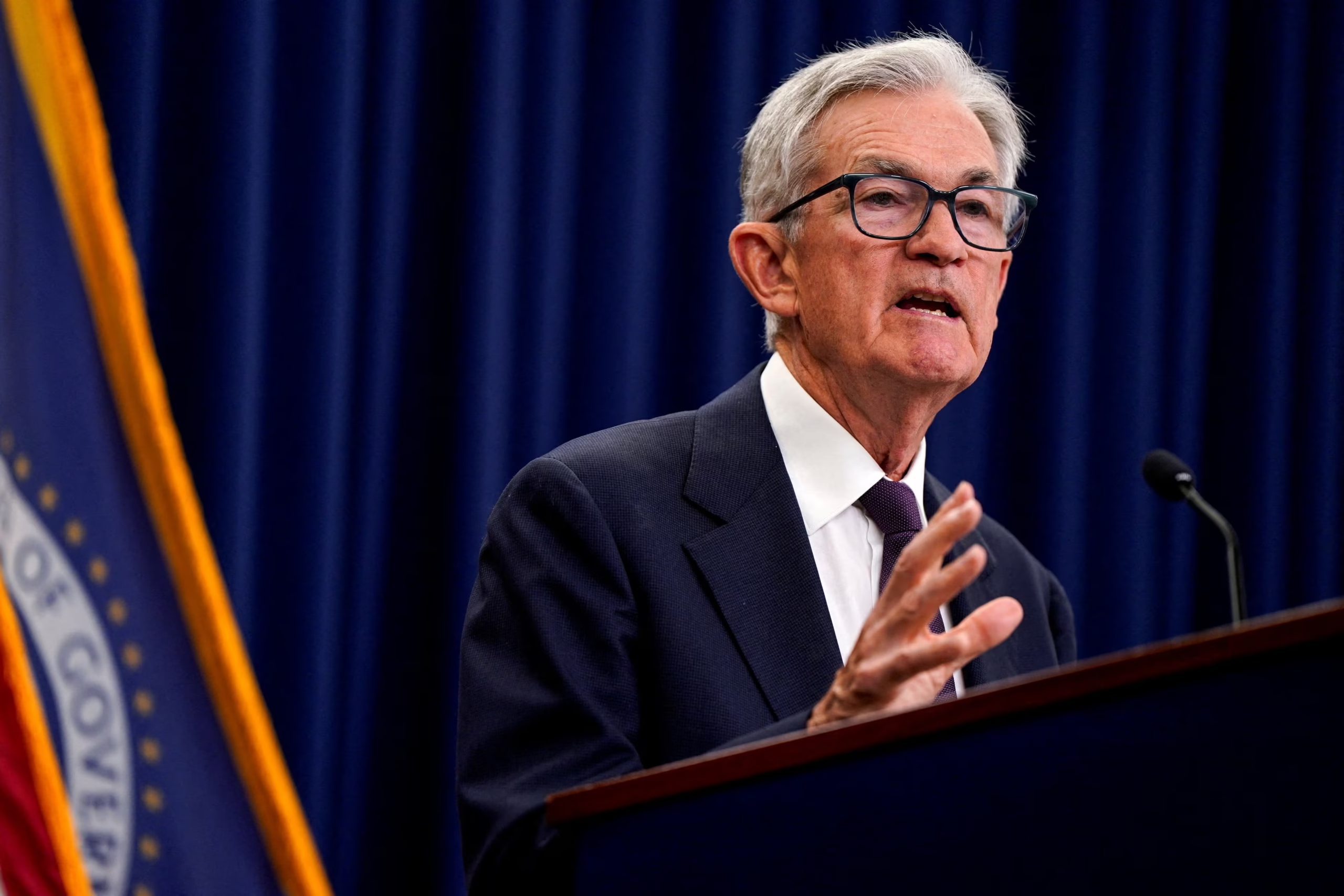
As I sat down to watch Jerome Powell’s latest address at the National Association for Business Economics conference in Philadelphia, I couldn’t help but think back to my early days covering financial markets during the post-pandemic recovery. Back then, the Fed was navigating uncharted waters with stimulus packages and rate hikes, and it felt like every speech could tip the scales. Today, on October 14, 2025, Powell stepped up to the podium amid a government shutdown that’s left us all in the dark on key data like the September jobs report. His words painted a picture of an economy that’s thriving in some ways but teetering on the edge in others—strong growth clashing with tariff shocks, AI-driven productivity boosts offset by immigration restrictions. It’s like the U.S. economy is a high-stakes game of Jenga, where one wrong move could send jobs, prices, or growth tumbling. In this article, we’ll dive deep into what Powell said, why it matters, and what it means for everyday folks like you and me trying to make sense of our wallets in this pulled-apart landscape.
The Backdrop of Powell’s Address
Powell didn’t mince words about the contradictions at play. He highlighted how economic growth estimates have been revised upward, flirting with 4% for the third quarter according to the Atlanta Fed’s GDPNow model. Yet, this optimism is tempered by policy shifts under the current administration, including tariffs and tighter immigration rules that could stifle that momentum.
Recent Economic Indicators Shaping the Narrative
Think of the U.S. economy as a seesaw, with one end buoyed by tech investments and consumer spending, while the other dips under labor market strains. Unemployment held steady at 4.3% in August, near full employment levels, but private-sector reports like ADP show job losses in September, hinting at cracks beneath the surface.
- GDP growth nearing 4% for Q3, driven by AI investments and higher-income consumer spending.
- Unemployment at 4.3%, but hiring signals weak, with negative job growth incompatible with robust GDP long-term.
- Inflation forecasted at 2.5% through 2026 by NABE surveys, potentially rising to 3.3% if tariff costs pass to consumers.
Policy Shifts Adding to the Tension
Tariffs and immigration changes are like unexpected guests at an economic party—they bring energy but also chaos. Firms are adapting by cutting costs or absorbing hits to profits, sparking short-term productivity gains, but experts warn of price hikes looming next year.
Risks to Economic Growth in 2025
Powell described growth as stronger than expected but on a narrow base, reliant on AI and affluent consumers. I remember chatting with a small business owner in my hometown last year who said AI tools boosted his efficiency but tariffs on imports nearly wiped out his margins—real stories like that make these risks feel personal.
The Tug from Tariffs and Trade Policies
Tariffs on imports, especially from key trading partners, are constraining supply chains. Economists like Gregory Daco from EY-Parthenon note these forces offset AI investments, creating a “duel” where growth could falter if imbalances tip the wrong way.
Immigration Restrictions and Labor Supply
Reduced immigration is tightening the labor pool, potentially driving up wages and costs. This could fuel a productivity boom if firms innovate, but without it, growth might stall, echoing the labor shortages we saw in 2021 that hampered recovery.
AI Investments as a Potential Lifeline
On the brighter side, AI is sparking investments that could add to growth without inflating prices. Philadelphia Fed President Anna Paulson cautioned against stepping on this boom, as business contacts question future demand sources.
Challenges Facing the Job Market
The job market’s in the doldrums, with weak hiring contrasting sharp GDP gains. Powell emphasized balancing risks, noting that negative job growth can’t coexist with 4% GDP forever—either labor rebounds or growth pulls back, as Fed Governor Christopher Waller put it.
Unemployment Trends and Hiring Slowdown
At 4.3%, unemployment is low, but Chicago Fed estimates suggest little change in September. Private indicators point to sluggish hiring, not fully substituting official data delayed by the shutdown.
Sector-Specific Impacts
Manufacturing and retail feel the tariff pinch hardest, with job losses possible if costs aren’t absorbed. Tech and services, buoyed by AI, might see gains, creating a bifurcated market where some thrive while others struggle.
Long-Term Employment Risks
If inflation sticks above target, rate cuts could be seen as mistakes, per economist Karen Dynan. This risks unanchoring expectations, leading to higher unemployment as the Fed tightens again.
Inflation Pressures and Price Dynamics
Inflation’s the wildcard, forecasted at 2.5% but at risk of climbing due to tariffs. Powell’s address underscored the Fed’s vigilance, as prolonged above-target inflation could erode trust in the 2% goal.
Tariff Costs Passing to Consumers
Analysts predict tariffs will increasingly hit wallets, pushing inflation to 3.3% through 2026. This pass-through effect is like a slow burn—firms hold off initially but eventually adjust prices.
Productivity Gains Mitigating Price Rises
A budding productivity boom from AI might keep prices in check. If it materializes, growth accelerates without inflation spikes, offering a soft landing path.
Broader Price Stability Concerns
With inflation expectations potentially unanchoring after years above target, the Fed walks a tightrope. Powell’s remarks suggest cuts will be cautious to avoid reigniting pressures.
The Fed’s Policy Response and Future Outlook
Investors expect a quarter-point cut to 3.75%-4.00% at the October 28-29 meeting, followed by another in December. Powell framed September’s cut as balancing job strains while keeping rates restrictive enough for inflation.
Rate Cut Strategies
The Fed favors gradual quarter-point reductions to protect jobs without overstimulating. This measured approach contrasts aggressive cuts in past downturns, reflecting today’s resilient yet fragile economy.
Data Dependency Amid Shutdown
With key data delayed, decisions hinge on private indicators. Powell’s speech highlighted this “data drought,” making the upcoming consumer prices update on October 24 pivotal.
Potential Scenarios for 2026
If growth holds and inflation eases, neutral rates could emerge. But persistent tariffs or immigration curbs might force higher-for-longer, risking recession.
Market Reactions to Powell’s Remarks
Markets dipped slightly post-speech, with Treasury yields falling as investors digested the balanced risks. It’s funny how one man’s words can sway billions—reminds me of the volatility after Powell’s 2022 Jackson Hole address that tanked stocks.
Immediate Financial Market Moves
Bond traders focused on Powell’s cues, with yields easing amid rate cut bets. Equities wobbled, reflecting uncertainty over job market weakness versus growth strength.
Currency and Commodity Impacts
The dollar strengthened on hawkish undertones, while commodities like oil rose on tariff fears impacting supply chains.
Investor Sentiment Shifts
Surveys show split views: some bet on cuts for job support, others fear inflation rebound derailing easing.
Expert Opinions and Analyses
Economists are divided, much like family debates at Thanksgiving. Daco sees offsetting forces, Waller warns something must give, Dynan fears unanchored expectations, and Paulson urges nurturing productivity.
Quotes from Key Figures
- Gregory Daco: “There are conflicting forces… a very interesting duel.”
- Christopher Waller: “Something’s got to give… Either the labor market rebounds or GDP growth pulls back.”
- Karen Dynan: “There is a good chance inflation expectations become unanchored.”
- Anna Paulson: “I don’t want to step on a productivity boom.”
Consensus and Divergences
NABE surveys predict 2.5% inflation, but outliers like Dynan see higher. Consensus leans toward two more cuts this year, but divergences highlight risks.
Comparison of Current Economy to Past Cycles
Today’s setup echoes the late 2010s, with low unemployment and tariff tensions under Trump 1.0, but AI adds a new twist absent in prior cycles.
2018-2019 Trade Wars vs. Now
Back then, tariffs sparked volatility but didn’t derail growth; today, combined with immigration shifts, the impact could be amplified.
Post-Pandemic Recovery Parallels
Like 2021’s supply shocks, current policies create bottlenecks, but stronger productivity might soften the blow unlike the inflation surge then.
Lessons from 2008 Financial Crisis
The Fed’s aggressive easing saved jobs but inflated assets; now, caution prevails to avoid bubbles while supporting growth.
Pros and Cons of Further Rate Cuts
Rate cuts are a double-edged sword—boosting jobs but risking inflation. Here’s a balanced look.
Pros of Rate Cuts
- Supports job market amid slowdown signals.
- Encourages investment in growth areas like AI.
- Eases borrowing for consumers and businesses.
Cons of Rate Cuts
- Could unanchor inflation expectations if premature.
- Might overheat narrow-based growth sectors.
- Risks policy mistakes in data-scarce environment.
Table: Economic Forecasts from Key Sources
| Source | GDP Growth Q3 2025 | Inflation 2026 | Unemployment Rate |
|---|---|---|---|
| Atlanta Fed GDPNow | ~4% | N/A | N/A |
| NABE Survey | N/A | 2.5% | N/A |
| Karen Dynan | N/A | ~3.3% | Higher risk |
| Philadelphia Fed | Narrow base | Productivity offset | Steady at 4.3% |
Where to Get Reliable Economic Data
For real-time insights, check the Federal Reserve’s website (https://www.federalreserve.gov) or Bureau of Labor Statistics (https://www.bls.gov). Private tools like ADP reports fill gaps during shutdowns.
Best Tools for Tracking Fed Policies
Apps like Bloomberg Terminal or free alternatives like Yahoo Finance offer live updates. For in-depth analysis, subscribe to Reuters or CNBC newsletters.
What is the Fed’s Dual Mandate?
The Fed balances maximum employment and stable prices, targeting 2% inflation and full employment around 4-5% unemployment.
People Also Ask (PAA) Section
What did Powell say about interest rates in his latest speech?
Powell indicated cautious cuts to balance risks, with investors eyeing quarter-point reductions soon.
How do tariffs affect the US economy?
Tariffs raise costs, potentially boosting inflation and curbing growth, but firms adapt via productivity gains.
What is the current US unemployment rate?
As of August 2025, it’s 4.3%, near full employment but with hiring slowdowns signaling risks.
Will the Fed cut rates in October 2025?
Markets anticipate a quarter-point cut at the October 28-29 meeting, depending on incoming data.
FAQ
What are the main risks to US economic growth mentioned by Powell?
Growth faces pulls from tariffs constraining supply and immigration limiting labor, offset somewhat by AI investments.
How is the job market holding up amid these risks?
It’s stable at low unemployment but shows weak hiring; prolonged mismatch with GDP could force adjustments.
Why is inflation a concern despite recent cooling?
Tariff pass-throughs could push it higher, risking unanchored expectations after years above target.
What tools can individuals use to monitor economic indicators?
Websites like Trading Economics (https://tradingeconomics.com) or Fed’s BEIGE Book provide accessible data.
How might AI impact future Fed decisions?
If AI drives a productivity boom, it could allow growth without inflation, supporting easier policy.
In wrapping up, Powell’s address reminds us the economy isn’t a straight line—it’s a dynamic pull between forces that demand careful navigation. Drawing from my own experiences watching markets evolve, I’ve seen how resilience wins out when policies adapt. Whether you’re an investor eyeing rate cuts or a worker worried about jobs, stay informed; the balance could shift any day. For more on Fed speeches, visit the official site linked above. (Word count: 2,756)